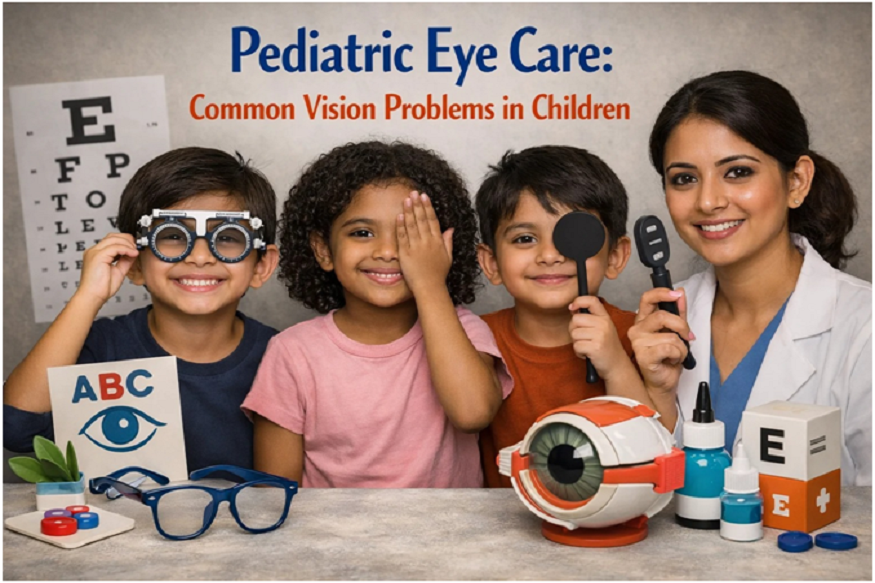
Most parents are keenly attuned to their child’s height, weight and developmental milestones, but often do not pay attention to vision until it seems there is a problem. But pediatric eye care is as important as anything else in a child’s health regime and if any warning signs are not detected, the consequences could be life-long ones that no parent would wish to experience. Considering how heavily children rely on their vision for nearly every daily activity, putting eye health on the back burner simply isn’t an option.
Why Children’s Eyes Deserve Early Attention
Throughout the early school years, a child’s vision system is still continually growing. Untreated eye conditions in this age impact not only on sight but also social development, education and self-confidence. Actually, a child learns approximately 80% of what he/she learns in school through the eyes. A regular child eye checkup is one of the best preventive steps a parent can do for this reason alone.
Read More: Top Eye Hospitals in South India
The tough part? Because they think that everyone sees the world the same way they do, the majority of kids never complain about having cloudy vision. Given this, it is more important than waiting for signs to be evident to have regular eye screenings with a qualified kids eye specialist. Sometimes instructors spot warning flags before parents do. For example, a kid who is sitting abnormally close to the screen or gazing at the board all the time is flashing subtle warning indicators that need to be handled right immediately.
Common Eye Problems in Children Parents Should Know
Children vision problems come in different types, but some are more frequent:
- Myopia:Myopia is one of the most frequent common eye problems in children. It causes them to see clearly at near range (under 25cm) but not so clearly at distance (above 25cm). It mostly shows its visual difficulties between the ages of 6 and 14 and worsens with age. Its rise in younger children is increasingly related with lifestyle factors such as excessive screen time and limited outdoor exercise.
- Hyperopia:It is the opposite of Myopia. Children with hyperopia face challenges with reading and other close tasks while see farsighted distances clearly. The brain adapts and many people don’t realize there is a problem, though over time, it becomes tired, headaches and eye strain.
- Amblyopia: This problem develops when there is a gradual weakening of one eye because it is not getting a clear message from that eye to the brain. About 2% of children are impacted with it, and medicinal cure works best under the age of seven. Many parents are shocked to learn their child has this condition because the stronger eye masks the problem so effectively in daily life.
- Strabismus:In Strabismus, a child’s eyes are misaligned and their binocular vision and depth perception are compromised. If not treated early by a kids eye specialist, the chances of amblyopia increases.
- Astigmatism:The cause of blurriness is uneven eye shape at all distances. While many children have slight myopia from birth and are unaware of it, mild to serious cases require the use of correction glasses.
Practical Signs Parents Should Watch For at Home
Children typically express symptoms at home that go unrecognised before a formal diagnosis is ever made. Signs that should be addressed seriously include frequent eye scratching, moving the head to one side when watching TV, avoiding books, and complaining of weary eyes after short reading sessions. When it comes to recognising children’s eye issues early, parents are always the first line of protection. Following their gut emotions and arranging an early child eye checkup might substantially influence a child’s trajectory.
When Should Parents Book a Child Eye Checkup?
The first full child eye checkup should be performed around six months of age, again at age three, and once more prior to beginning school, according to experts. Annual checkups are good after that. While useful, school vision checks are insufficiently thorough to take the place of a comprehensive review by a pediatric eye care expert.
Read More: Pupil Reactivity: Why it’s a Crucial Indicator in Emergency Medicine?
ASG Eye Hospital recommends that every growing child get a comprehensive eye check at least once during their growing phase. Things like undiagnosed astigmatism, latent squint, or early dry eye syndrome can be found at earlier stages of their life.
The Bottom Line
Most parents are unaware of how common children vision problems are, and early discovery is important. Protecting children’s eyesight and general growth is achieved by treating common eye problems in children at the proper time. The earlier the action, the better the effects for young eyes.



Leave a Reply
You must be logged in to post a comment.